Key Takeaways
- Sea buckthorn is a rare botanical source of Omega-7, vital for skin and mucous membrane health.
- It contains 12 times more Vitamin C than oranges, providing extraordinary immune support.
- Rich in over 190 bioactive compounds, it operates as a full-spectrum antioxidant powerhouse.
- Clinical studies show it supports cardiovascular health, reduces inflammation, and promotes collagen synthesis.
- Sourced sustainably from high altitudes, its nutritional density is unmatched by lowland varieties.
What Is Sea Buckthorn?
Sea buckthorn (Hippophae rhamnoides) is a resilient, golden-orange berry that grows on hardy deciduous shrubs primarily in the high altitudes of the Himalayas, Europe, and Northern Asia. It is scientifically recognized as one of the most nutrient-dense berries on the planet, containing over 190 active biochemical compounds. Because it thrives in extreme, high-altitude environments—often above 3,000 meters—it has evolved to produce extraordinary concentrations of protective antioxidants, vitamins, and rare fatty acids to survive harsh UV radiation and freezing temperatures.
Historically, this botanical marvel has been a cornerstone in traditional Tibetan, Mongolian, and Ayurvedic medicine. Its name, Hippophae rhamnoides, translates to "tree that makes horses shine," referencing an ancient Greek legend where warhorses fed on its leaves and berries developed brilliant, shiny coats and unmatched vitality. Today, modern science is finally validating what ancient civilizations knew centuries ago: sea buckthorn is an undisputed superfood.
Nutritional Profile — The Numbers
To truly understand the power of sea buckthorn, we must look at the data. It is the only known plant source in the world to contain all four omega fatty acids—Omega-3, Omega-6, Omega-9, and the exceptionally rare Omega-7 (palmitoleic acid). Here is the nutritional breakdown per 100g of raw sea buckthorn berries:
| Nutrient | Amount per 100g | Key Function |
|---|---|---|
| Vitamin C | 695mg | Immunity, collagen synthesis (12x more than oranges) |
| Vitamin E (Tocopherols) | 3.5mg | Cellular protection, skin health |
| Omega-7 (Palmitoleic Acid) | ~35% of lipid profile | Mucous membrane health, cardiovascular support |
| Omega-3 (Alpha-linolenic acid) | 4.5g | Brain health, anti-inflammatory |
| Beta-carotene (Vitamin A precursor) | 3.4mg | Vision, immune function |
| Flavonoids (Quercetin, Isorhamnetin) | 150mg | Powerful antioxidants, vascular health |
According to research published in the Journal of Nutritional Biochemistry, the synergistic effect of these nutrients—particularly the combination of water-soluble Vitamin C and fat-soluble Vitamin E and Omegas—makes sea buckthorn incredibly bioavailable and effective within the human body.
5 Clinically Proven Benefits of Sea Buckthorn
1. Immune System Support
With an average of 695mg of Vitamin C per 100g, sea buckthorn is a formidable immune booster. Studies show that its high concentration of ascorbic acid helps stimulate the production of white blood cells and enhances the skin's barrier function against pathogens. When combined with its vast array of flavonoids, sea buckthorn provides a multi-tiered defense system against oxidative stress.
2. Heart & Cardiovascular Health
The rare Omega-7 fatty acid found abundantly in sea buckthorn has been heavily researched for its cardiovascular benefits. Clinical trials indicate that Omega-7 can help lower "bad" LDL cholesterol while simultaneously increasing "good" HDL cholesterol. Furthermore, the antioxidants in the berry help prevent the oxidation of LDL cholesterol—a key step in preventing atherosclerosis.
3. Skin Health & Anti-Aging
Sea buckthorn is frequently hailed as an ingestible beauty treatment. The unique combination of Vitamin E, beta-carotene, and Omega-7 works synergistically to promote tissue regeneration, boost collagen synthesis, and protect the skin from UV-induced oxidative damage. According to dermatological studies, oral supplementation of sea buckthorn oil improves skin hydration, elasticity, and roughness within just 4 to 8 weeks.
4. Digestive Health
The high mucilage content and unique lipid profile of sea buckthorn are highly beneficial for the gastrointestinal tract. Omega-7 plays a crucial role in maintaining and healing the mucous membranes that line the digestive system. It has been shown in scientific models to accelerate the healing of gastric ulcers and reduce intestinal inflammation.
5. Anti-Inflammatory Properties
Chronic inflammation is the root cause of many modern diseases. Sea buckthorn contains over 150mg of flavonoids per 100g, specifically quercetin and isorhamnetin, which are potent anti-inflammatory agents. Research indicates that these compounds down-regulate pro-inflammatory cytokines, making sea buckthorn highly effective for managing conditions like rheumatoid arthritis and systemic inflammation.
Sea Buckthorn in Ayurvedic Medicine
Long before clinical trials existed, Ayurvedic practitioners recognized sea buckthorn—often referred to as Dharma-Vriksha or "the holy tree"—for its balancing properties. In Ayurvedic philosophy, sea buckthorn is considered a Rasayana (rejuvenator). It is uniquely balancing for both Vata (due to its rich oils) and Kapha (due to its astringent, detoxifying nature).
It was traditionally used to build Ojas (vitality and immunity), purify the blood, and heal the digestive fire (Agni). This ancient wisdom perfectly aligns with BerryBrim's philosophy: we believe that optimal health lies at the intersection of time-tested traditional practices and rigorous modern nutritional science.
How BerryBrim Sources Sea Buckthorn
Not all sea buckthorn is created equal. The nutritional density of the berry is directly correlated to the stress of its environment. Low-altitude, commercially farmed varieties lack the dense antioxidant profile of their high-altitude counterparts.
That is why BerryBrim sources its sea buckthorn exclusively from the trans-Himalayan regions of Ladakh and Spiti Valley in India. Here, wild-harvested at elevations exceeding 3,000 meters, the plants endure intense UV exposure, arid soils, and freezing winters. This stress forces the plant to hyper-produce the bioactive compounds that make it a superfood. We partner with local cooperatives who use sustainable, ethical harvesting techniques that protect the delicate Himalayan ecosystem while bringing you the most potent berries on earth.
How to Incorporate Sea Buckthorn Into Your Diet
Because raw sea buckthorn is highly acidic and tart, it is rarely eaten fresh. Instead, incorporating it into a balanced mix is the most effective and delicious way to consume it. We recommend starting with 1 to 2 tablespoons daily.
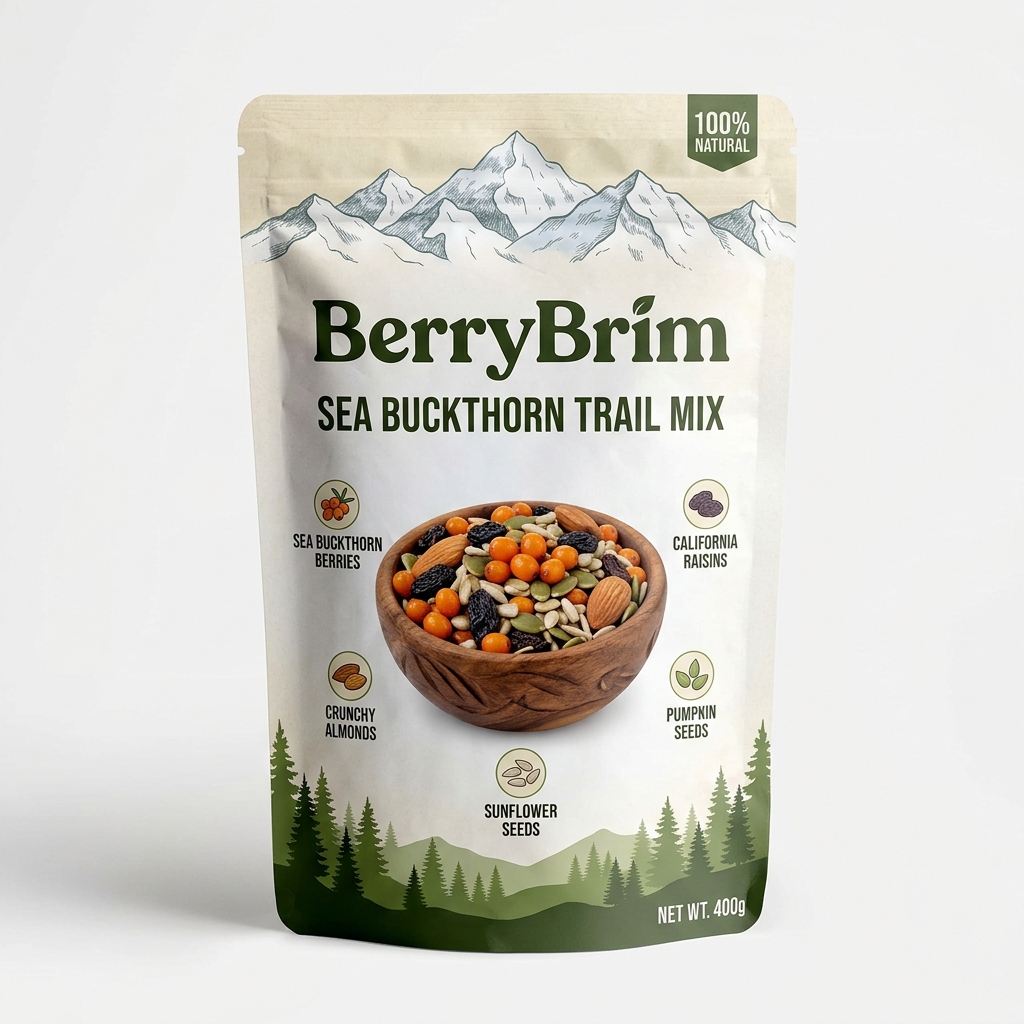
The easiest way to get your daily dose is through our BerryBrim Sea Buckthorn Trail Mix. By combining freeze-dried, wild-harvested sea buckthorn with complimentary nuts and seeds, we balance its tartness while providing a synergistic matrix of fats that enhance the absorption of its fat-soluble vitamins.
"Sea buckthorn isn't just a berry; it's a complete botanical pharmacy. The presence of Omega-7 combined with such high levels of antioxidants makes it an irreplaceable ingredient in functional nutrition."
— Dr. Riya Sharma, Clinical Nutritionist
Frequently Asked Questions
Sea buckthorn has a unique, tart, and citrusy flavor profile, often described as a cross between a sour orange, passionfruit, and a hint of earthy pine. It is quite acidic when eaten raw, which is why it is often blended with sweeter fruits, honey, or mixed into trail mixes to balance its natural tartness.
Generally, sea buckthorn is considered safe as a food ingredient when consumed in normal dietary amounts. However, due to its concentrated nutritional profile and bioactive compounds, pregnant or nursing women should always consult with their healthcare provider before adding therapeutic doses or new supplements to their diet.
For general health benefits, consuming 1 to 2 tablespoons of dried sea buckthorn berries or incorporating a handful of sea buckthorn-fortified trail mix daily is optimal. Clinical studies often use extracts equivalent to 5-10 grams of whole berries, making a daily handful of our trail mix an ideal dosage.
Sea buckthorn boasts an impressive ORAC (Oxygen Radical Absorbance Capacity) score of approximately 70,000 to 100,000 per 100g, depending on the altitude and harvest time. This makes it one of the most antioxidant-dense foods on the planet, far surpassing traditional berries like blueberries.
BerryBrim sources our sea buckthorn directly from the high-altitude regions of Ladakh and Spiti Valley in the Himalayas. We partner with local farmers who employ sustainable, wild-harvesting techniques above 3,000 meters elevation, ensuring maximum nutrient density and environmental stewardship.